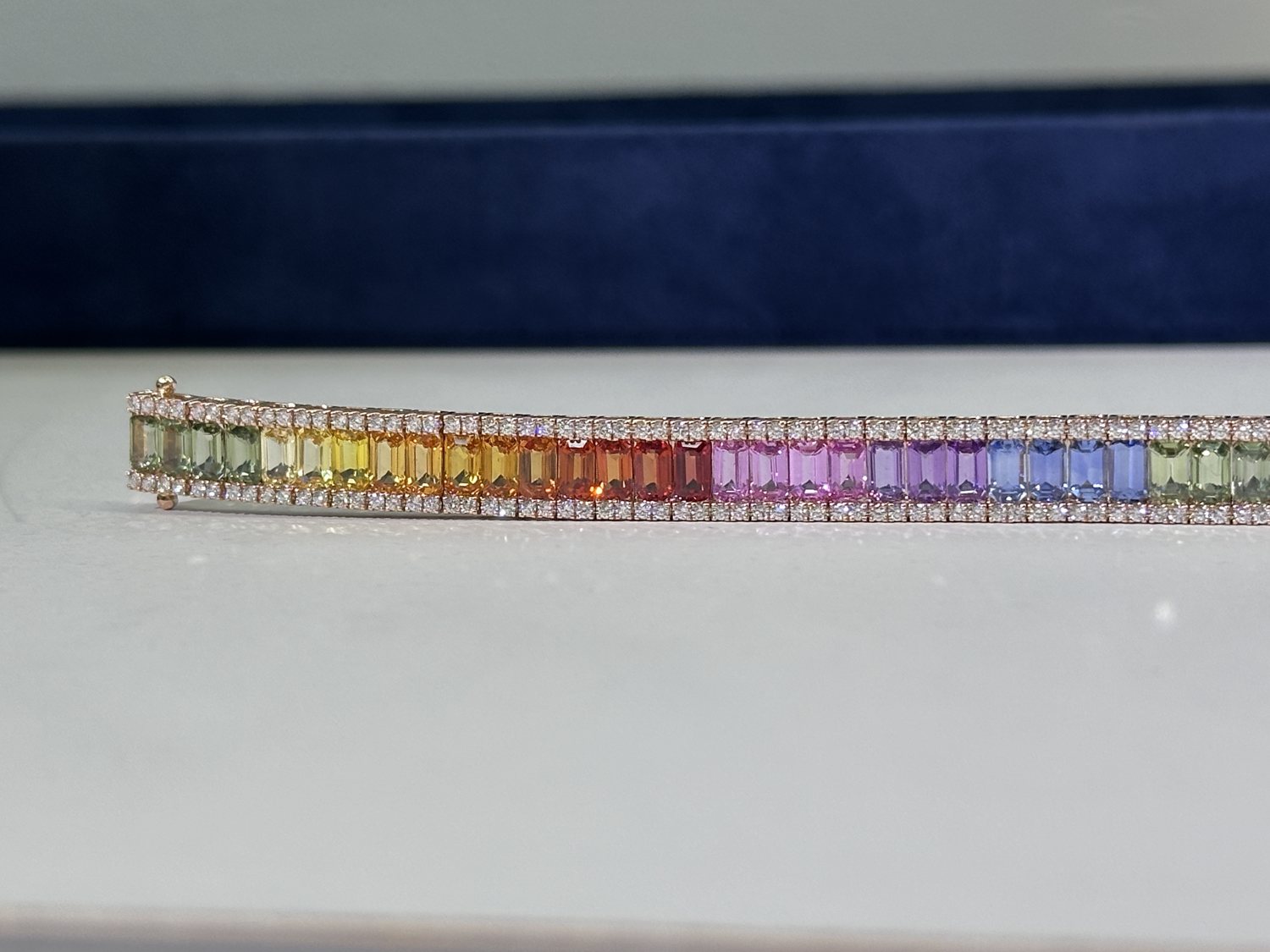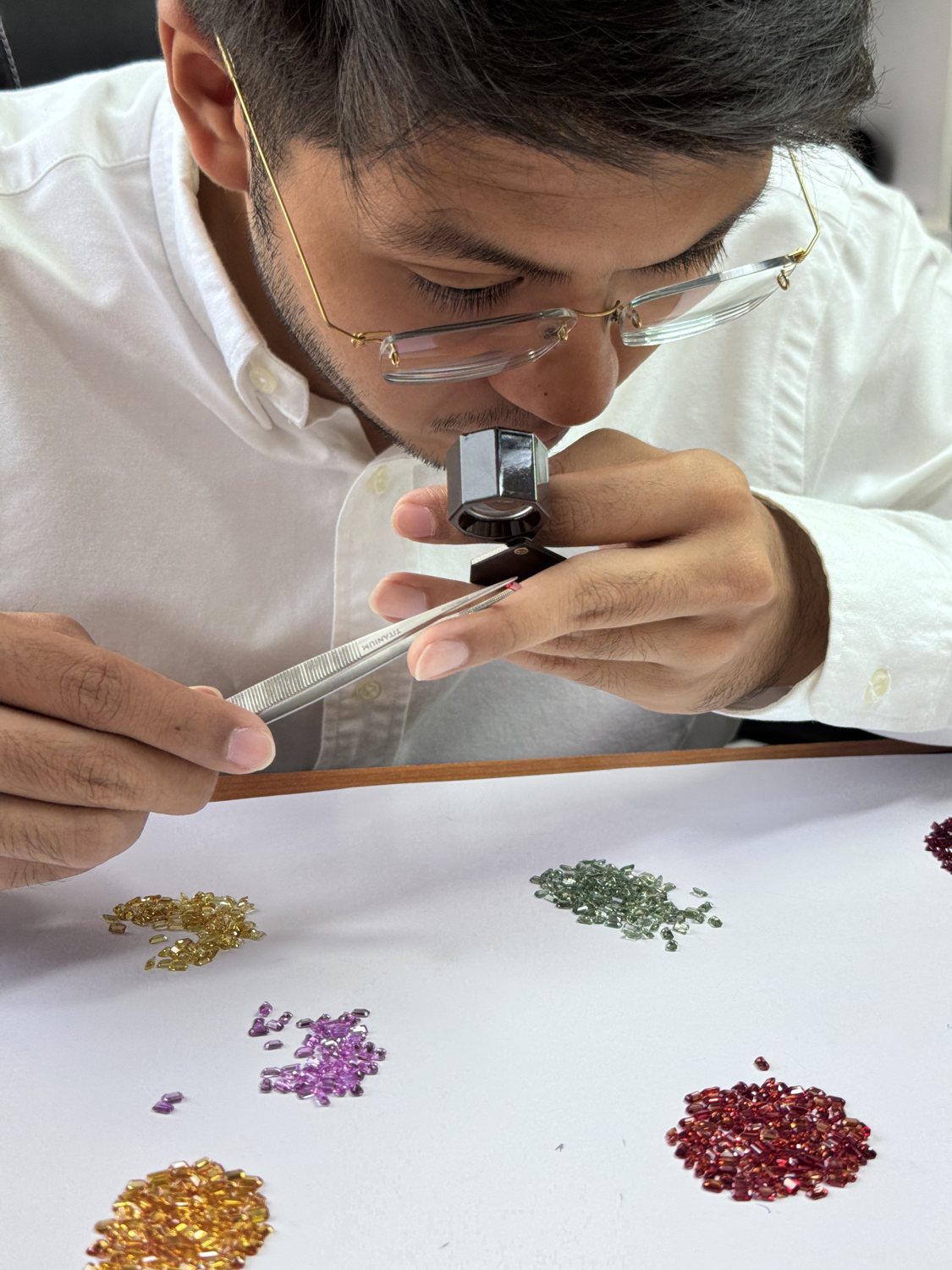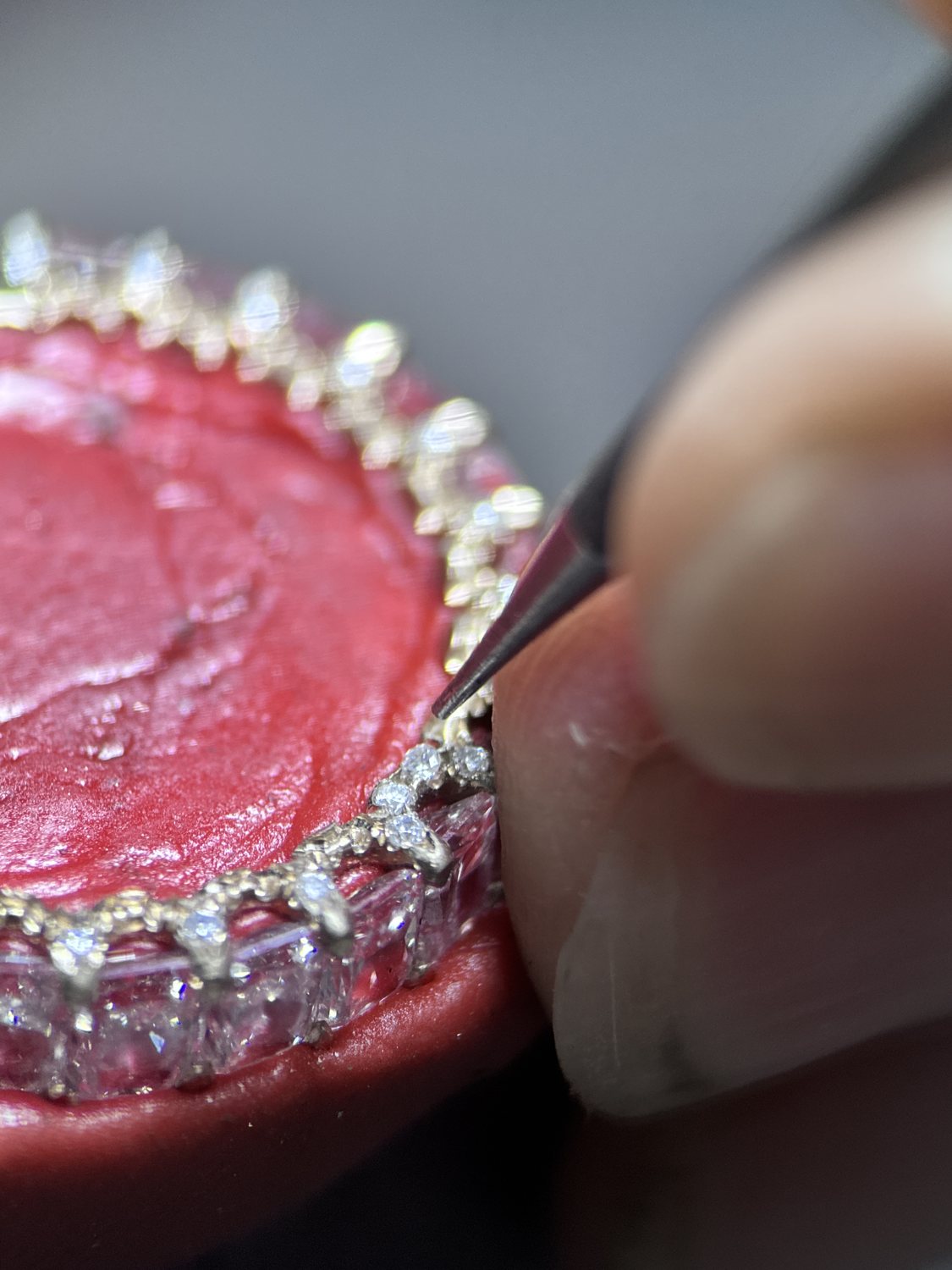
A finished ring looks effortless. Behind it sits a sequence of skilled steps, each one building on the last. Here is how a piece of fine jewelry travels from idea to finished object inside a Bangkok workshop.
1. Design and CAD
Every piece begins as an idea — a sketch, a reference image, or a brief. Designers translate that into a precise 3D model using CAD (computer-aided design) software. The model fixes every dimension: band width, stone sizes, gallery height, the angle of each prong. A 3D render lets the client approve the look and proportions before any metal is cut, which is the cheapest possible moment to make changes.
2. Wax and casting
From the approved model, the workshop produces a wax pattern of the piece, then casts it in metal using the lost-wax method — a technique thousands of years old, still the backbone of fine jewelry. The wax is encased in a plaster-like investment, which is heated so the wax melts and burns away, leaving a precise cavity. Molten gold, platinum or silver is poured or forced into that cavity. When the investment is broken away, a raw metal version of the design emerges.

3. Metalwork and assembly
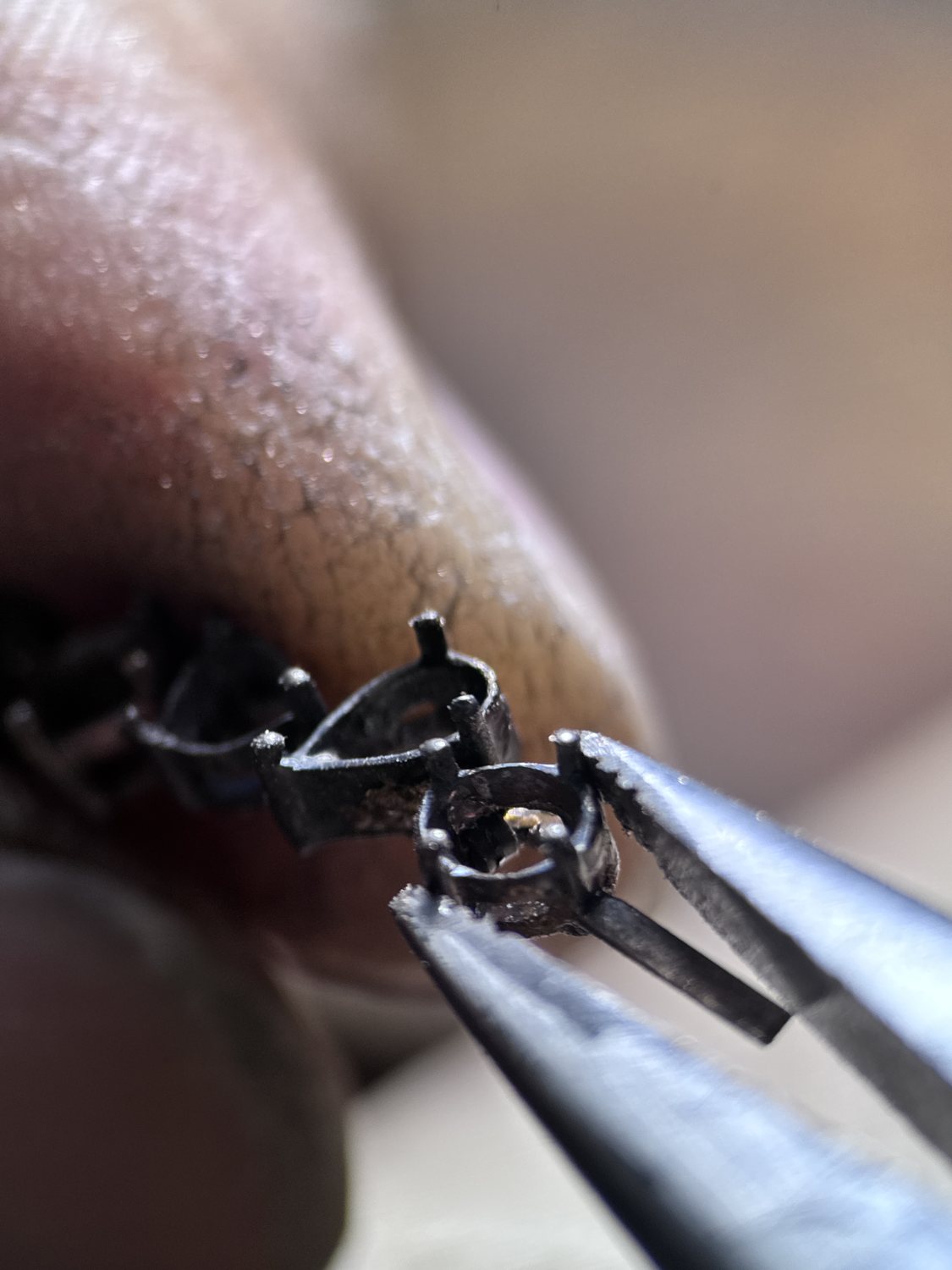
The raw casting is cleaned up at the bench: sprues removed, surfaces filed, components soldered together, and the form refined by hand. For a bracelet or necklace, individual links are assembled and articulated so the piece moves correctly. This is patient, precise work — the foundation everything else sits on.
4. Stone setting
Setting is where many pieces are won or lost. A setter secures each stone into the metal — by prongs, channels, bezels or pave — so it sits level, secure and at the correct height to catch light. On a rainbow sapphire eternity band or tennis bracelet, this means placing and securing dozens of matched stones in perfect alignment, by hand, under magnification. It is among the most demanding skills in the trade.
5. Polishing and finishing
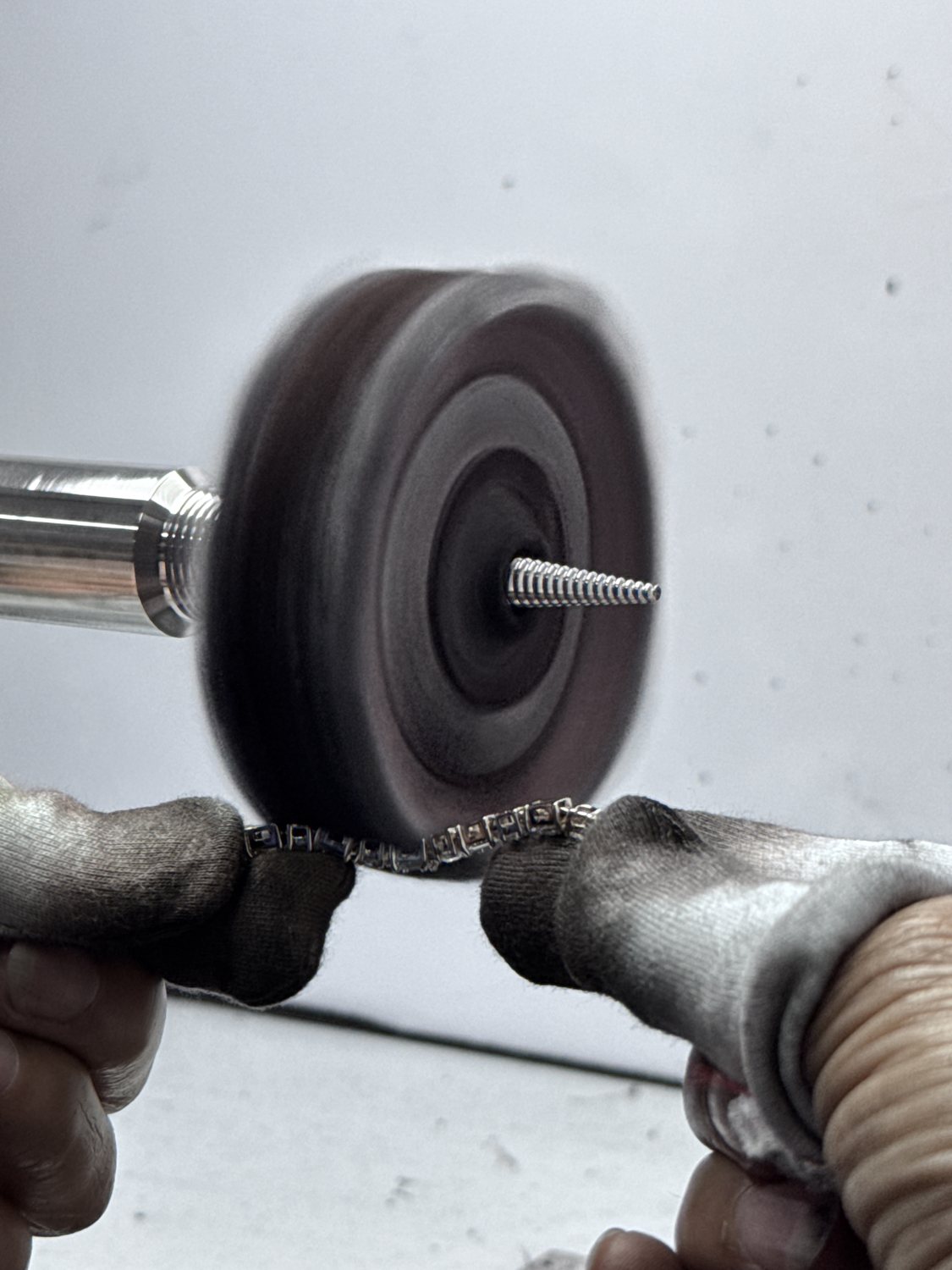
With stones set, the piece is polished to its final finish — high mirror polish, matte, brushed or a combination. Polishing removes the last tool marks and brings the metal to life. Any final touches, such as rhodium plating on white gold, happen here. Good finishing is what gives fine jewelry its quiet sense of quality.
6. Quality control
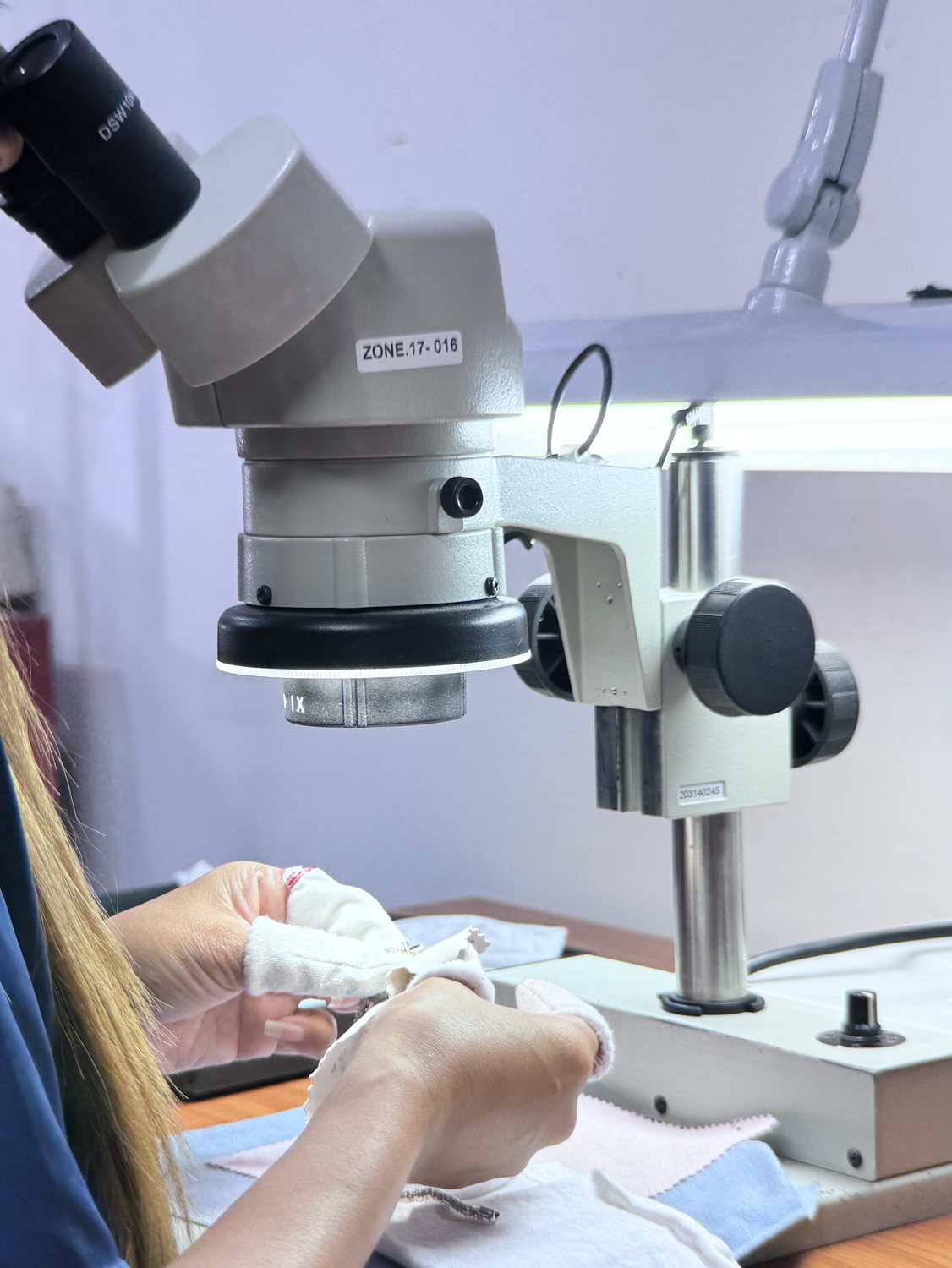
Before a piece ships, it goes through inspection — often a multi-stage process. Under magnification, a checker confirms that stones are secure and even, that the metal is clean and correctly finished, that dimensions match the specification, and that the piece is free of defects. For a buyer, this is where photo documentation and a quality record provide confidence that what was ordered is what arrives.
The thread running through it all
Design, casting, setting, finishing, inspection — each stage depends on the one before. A flaw early on multiplies later, which is why skilled hands and tight quality control matter at every step.
From workshop to your brand
Understanding the process helps you brief a manufacturer well and judge the result. If you are planning production, our guide to sourcing from Thailand covers choosing a partner, and our pricing guide explains how each of these stages feeds into cost and lead time.