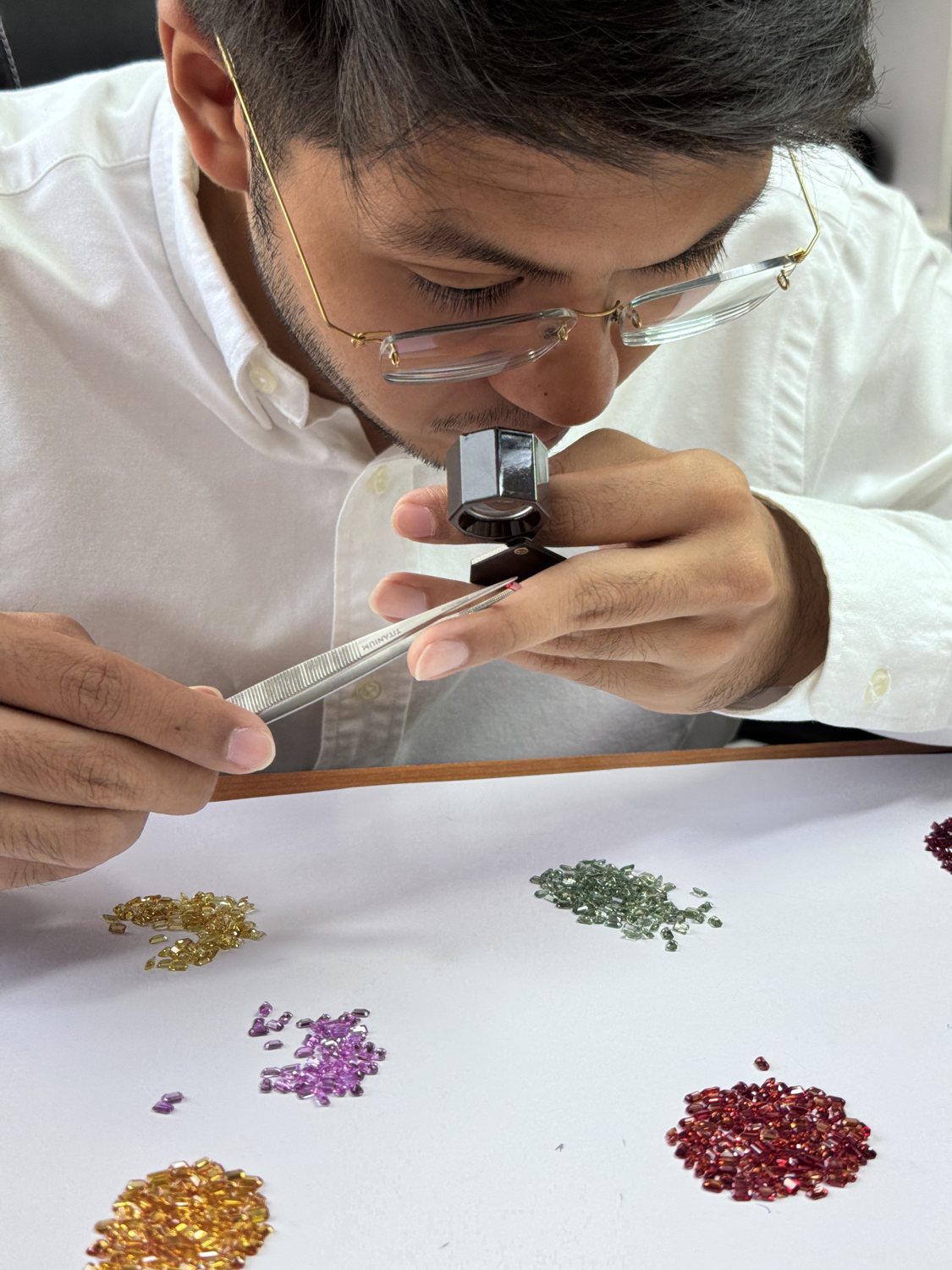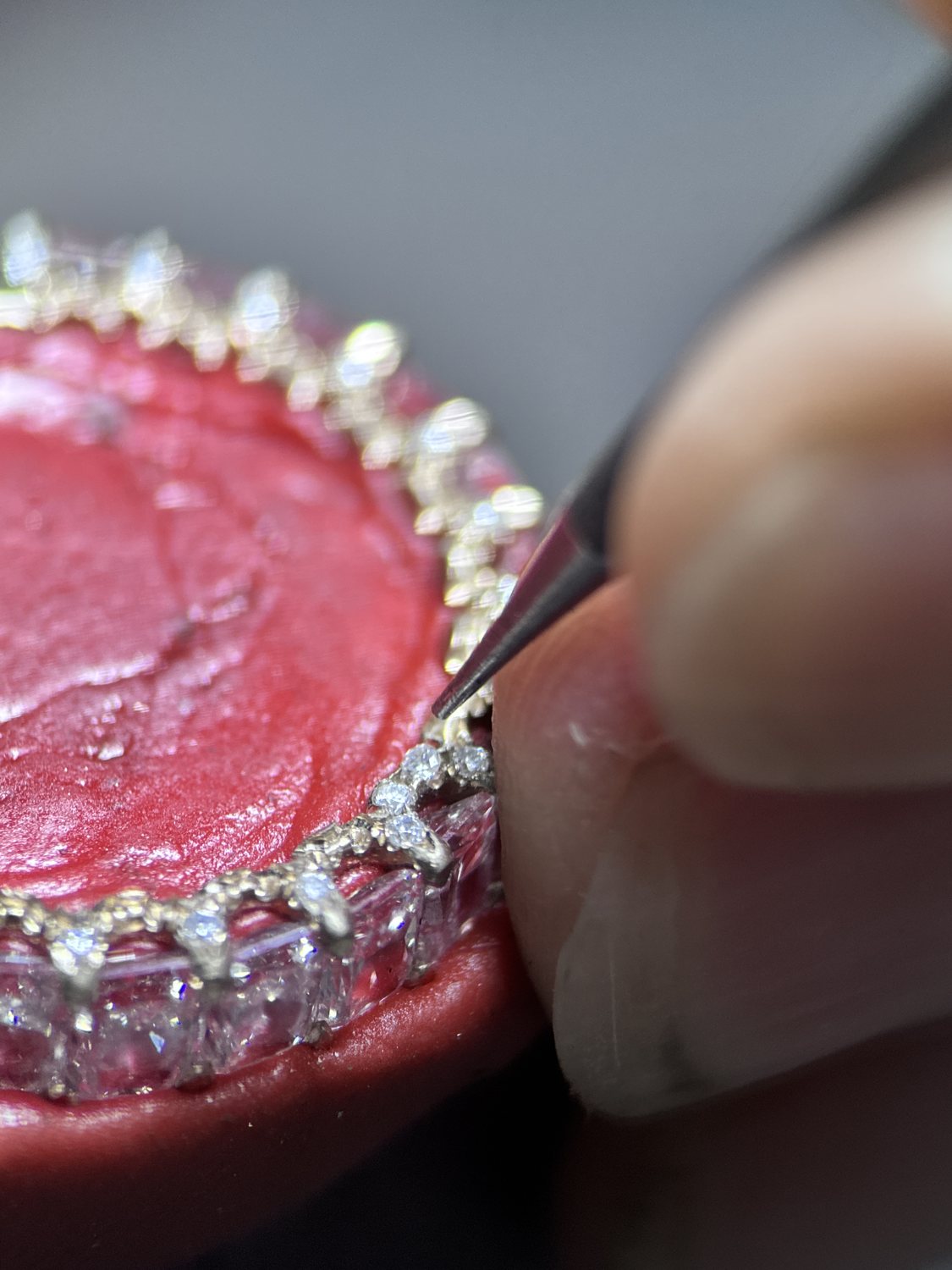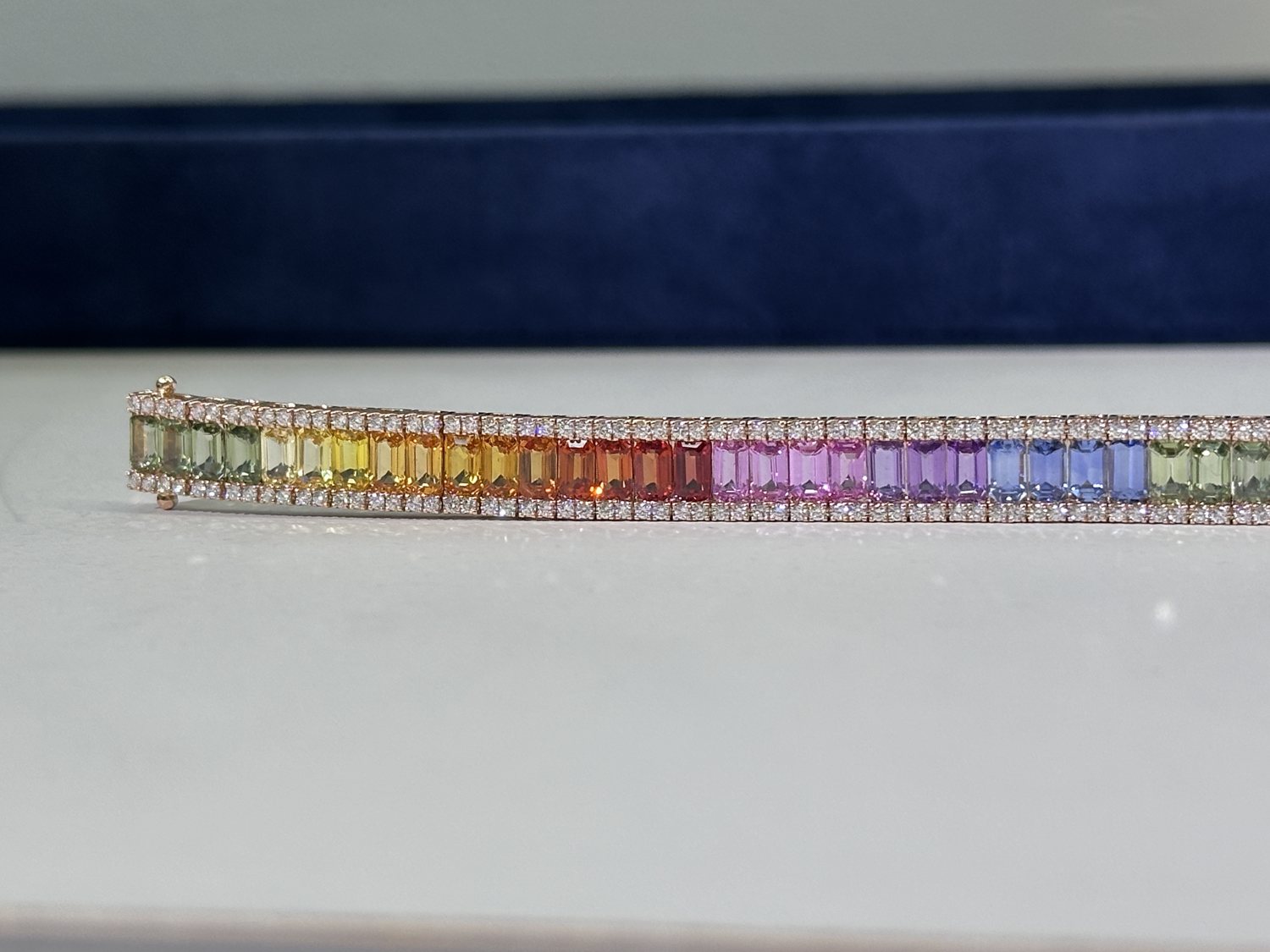
Few pieces stop a viewer like a rainbow sapphire bracelet catching the light — a smooth gradient running through every color of the spectrum. Here is what rainbow sapphire jewelry actually is, how it is made, and what to look for when you buy or manufacture it.
What is a rainbow sapphire?
A "rainbow sapphire" is not a single, unusual stone. It is a design: a series of sapphires in different colors, carefully curated and arranged so the piece sweeps through the spectrum like a rainbow. The art is in the selection and ordering of the stones — matching size, tone and saturation so the transition from one color to the next looks seamless.
Where the colors come from
Sapphire is a variety of the mineral corundum. The deep blue most people picture is only one of its colors; sapphires in any color other than blue are called fancy sapphires. The hues come from trace elements in the crystal:
- Iron and titanium produce the classic blue.
- Chromium produces pink — and with enough chromium the stone becomes red and is then classed as a ruby.
- Other trace elements and combinations give yellow, orange, peach, purple, green and teal.
Because corundum naturally occurs across this whole range, a single gem family can supply every color a rainbow design needs — one reason sapphires, rather than mixed gem types, are used for these pieces.
Natural and heated stones
The large majority of sapphires on the market today are natural stones that have been heat-treated — a long-established and accepted practice in the trade. Controlled heating, often between roughly 800°C and 1,800°C, can dissolve tiny inclusions to improve clarity and can deepen or even out color. "Natural" means the crystal grew in the ground rather than in a lab; "untreated" means it has had no heat or chemical enhancement. Untreated fancy sapphires in fine color exist but are rarer and command higher prices.
Good to know
Ask whether stones are natural and whether they are heated. For most commercial rainbow pieces, natural heated sapphires are standard — reputable suppliers will tell you clearly.
Popular rainbow sapphire pieces
- Eternity rings: a continuous band of fancy sapphires circling the finger in spectrum order.
- Tennis bracelets: a flexible line of matched stones — the most dramatic showcase of the gradient.
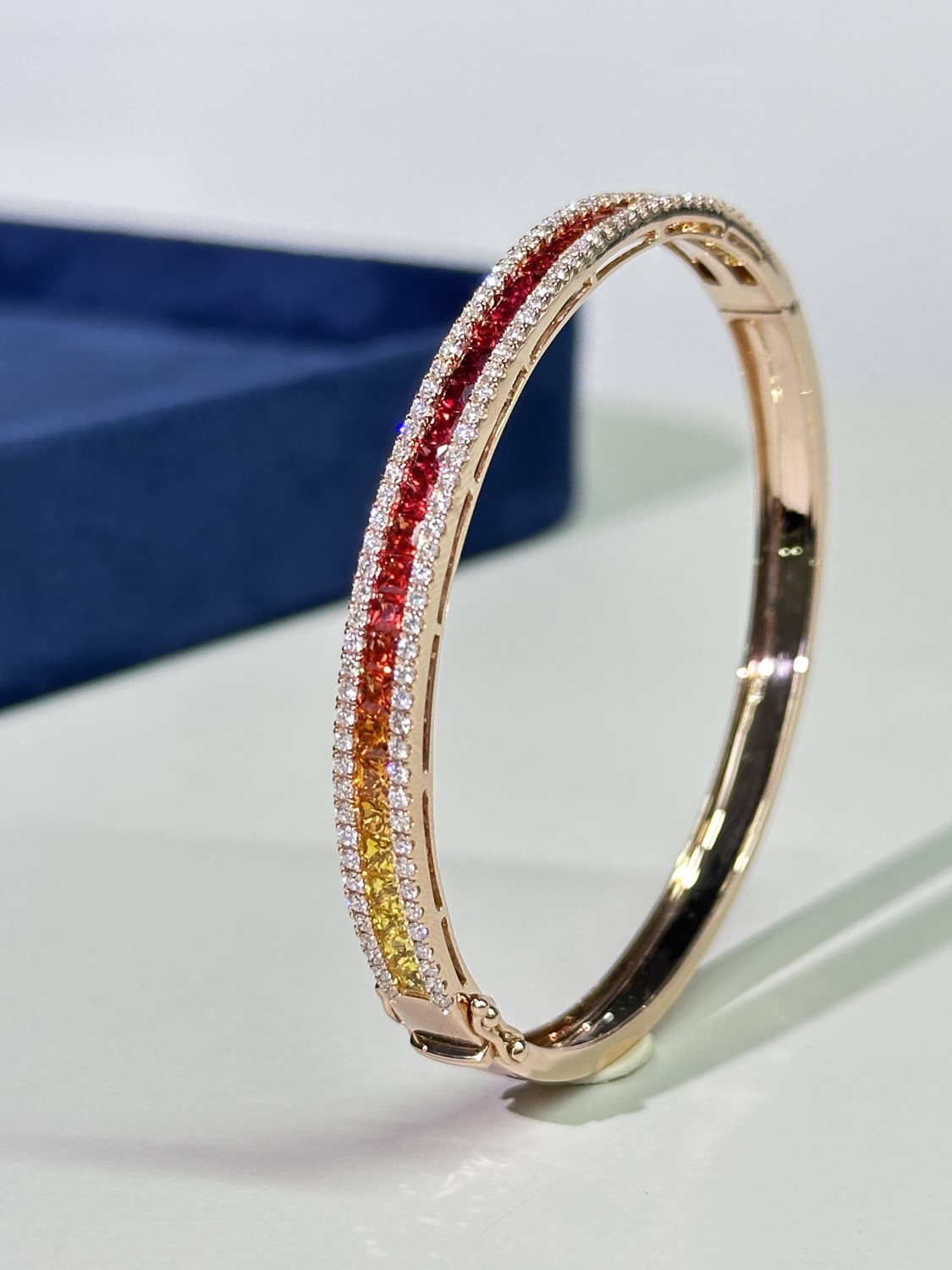
- Bangles: a rigid cuff or bangle with a rainbow channel, often in rose or yellow gold.
- Pendants and earrings: smaller accents that introduce the rainbow motif.
What makes a good piece
When judging quality, look at:
- Color transition. The gradient should flow smoothly, with no jarring jump between neighboring stones.
- Matching. Stones should be even in size and cut so the line looks uniform.
- Setting quality. Each stone should sit securely and level; channel and prong work should be clean and consistent.
- Metal and finish. A well-polished 14K/18K gold mount frames the colors and protects the stones.
Buying or manufacturing
Rainbow sapphire jewelry depends on two things done well: sourcing a wide, well-matched range of fancy sapphires, and setting them with precision. Thailand is a natural home for both, given its role as a colored-stone hub — see our guide to sourcing colored gemstones in Bangkok. If you are developing a collection, a manufacturer that sources stones in-house can match the gradient far more consistently than one buying loose parcels piecemeal.
Caring for rainbow sapphires
Sapphire is very hard (9 on the Mohs scale), second only to diamond, so these pieces wear well. Clean them with warm water, mild soap and a soft brush, and store them separately to avoid scratching softer jewelry. Avoid harsh chemicals and ultrasonic cleaning unless a jeweler confirms the stones are suitable.