Before you place a manufacturing order, three numbers matter more than any others: how much it costs, how many you must order, and how long it takes. Here is a clear, no-jargon look at all three.
What drives the price
Fine jewelry does not have a fixed list price because every piece is a different combination of materials and labor. Four factors set the cost.
1. Metal
Metal is usually the largest single cost. It depends on the weight of the piece and the purity you choose. Higher karat means more pure gold and a higher price:
| Metal | Gold content | Relative cost |
|---|---|---|
| 18K gold | 75% | Highest |
| 14K gold | about 58.5% | Medium |
| Silver 925 | 92.5% silver | Lowest |
Because gold trades on the open market, quotes are tied to the metal price on the day — expect pricing to be confirmed close to production.
2. Stones
Diamonds and colored gemstones can rival or exceed the metal cost. Price depends on size, quality, and how many stones a design uses. A micro-pave or full eternity setting uses far more stones — and more setting labor — than a single solitaire.
3. Labor and complexity
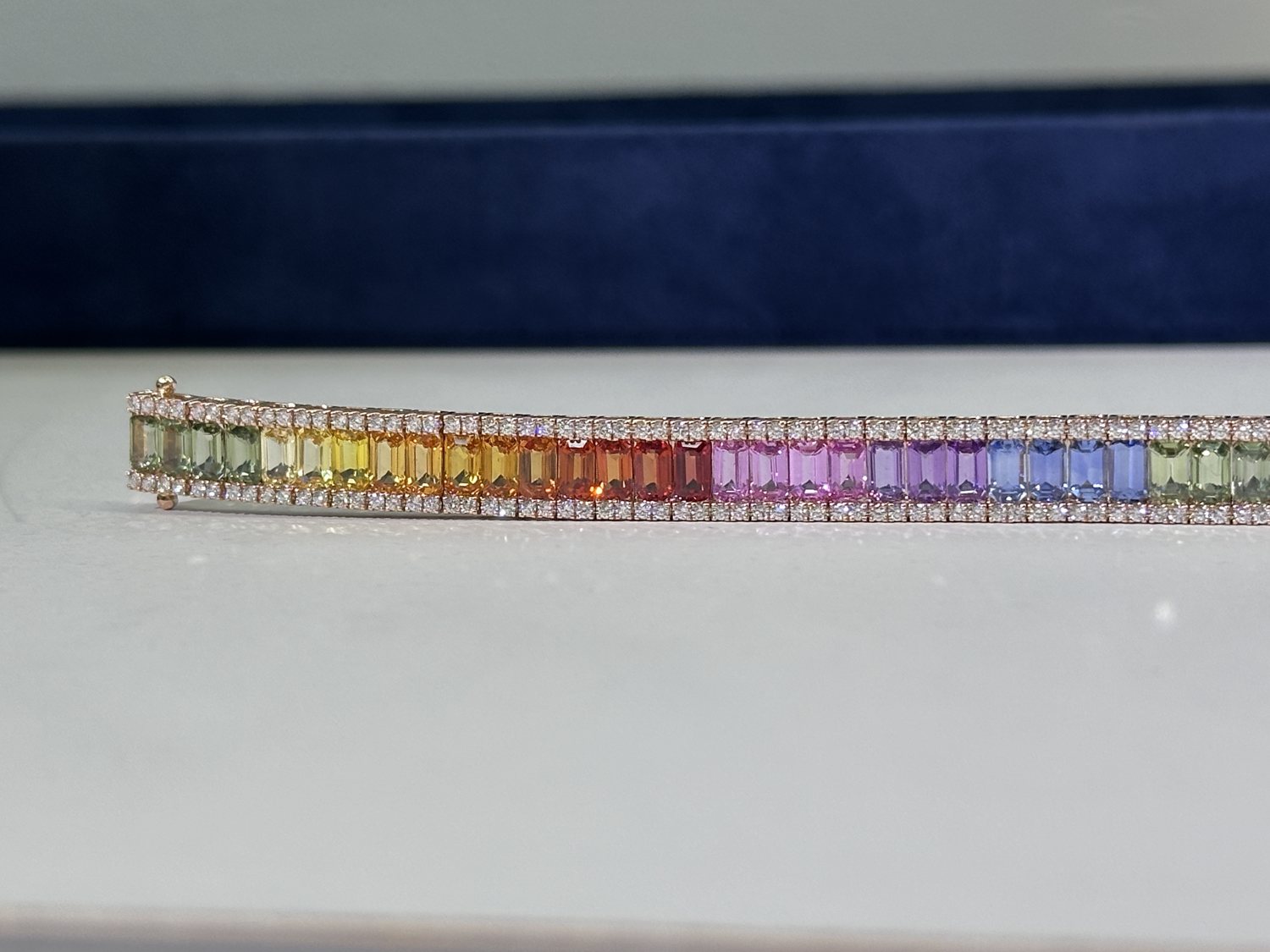
Hand setting, intricate detailing, and finishing all add labor. A plain band is quick; a gradient rainbow-sapphire bracelet with dozens of matched, individually set stones is not.
4. Quantity
Unit cost falls as quantity rises. Setup, mold and design costs are spread across more pieces, so larger runs lower the per-unit price.
Rule of thumb
Metal + stones + labor + setup, divided across your quantity. Change any one and the price moves — which is why a precise quote always follows your specific design and volume.
Minimum order quantities
MOQ exists because setup, molds and sampling have fixed costs. Typical starting points:
- Gold: often around 30 pieces per design.
- Silver: often around 50 pieces per design.
- First orders: many manufacturers will accept a smaller trial run — as low as 10–15 pieces — so you can test a design in market before committing to volume.
MOQ is usually per design, not per total order, because each design needs its own mold and setup.
Realistic lead times
Timelines depend on complexity and quantity, but a typical custom project looks like this:
| Stage | Typical time |
|---|---|
| Quotation & design (with 3D render) | 1–3 days |
| Sample production | 7–10 days |
| Full production | 2–4 weeks |
| Quality control | 2–3 days |
| Insured shipping | varies by destination |
Build buffer time into seasonal launches. If you need stock for a holiday window, start the conversation weeks earlier than the production time alone suggests.
Payment terms
Common terms in the trade include a deposit up front with the balance before shipping. Bank wire (T/T) is standard for international orders, and many manufacturers also accept other methods. Always confirm terms, currency and what each milestone payment covers in writing.
How to keep costs down
- Order in fuller runs to spread setup costs.
- Be flexible on metal and stones — 14K instead of 18K, or well-matched fancy sapphires instead of rare single stones, can change the price meaningfully.
- Reuse molds across a collection where designs share components.
- Finalize the design before sampling to avoid paying for repeated revisions.
For the bigger picture on choosing a partner, see our guide to sourcing jewelry from Thailand.